“Whenever you find yourself on the side of the majority, it is time to pause and reflect.” — Mark Twain
Open X on any given day and you will find them.
The taste people.
Someone quotes a Naval aphorism about good judgment being refined through creation. Someone else praises a curator saying “he’s got taste, real taste” for sharing design history. A VC publishes an essay about brand. A reply guy calls it out. Everyone retweets the person who said it the cleanest.
And underneath all of it, you’ll notice competition...
Who has the best taste? Who can be seen as the person who I can copy taste from?
The taste people don’t realise that the moment taste becomes something you perform—something you want to be known for—it stops being taste. It becomes a sloppy costume.
Think back to when you were a kid.
Do you remember having preferences so strong they were almost embarrassing? Like a color you refused to stop wearing. A song you played until everyone around you was tired of it. A texture, a smell, a corner of a room that made you feel like yourself in a way you couldn’t explain.
Nobody taught you those things. Nobody curated them for you. You just knew you loved them.
That was taste.
Then you grew up. And slowly, quietly, you started outsourcing those decisions. You checked what was popular. You looked at what the people you admired were wearing, reading, listening to. You wanted to belong somewhere. That is completely human though, but somewhere in that process, your intuitive taste got choked.
The child who knew exactly which mug felt right, and which one didn’t that child is still in there. You just stopped listening.
So what is taste, actually?
Taste is the child in you that likes things, yet you do not allow it to explore them because of your embarrassment.
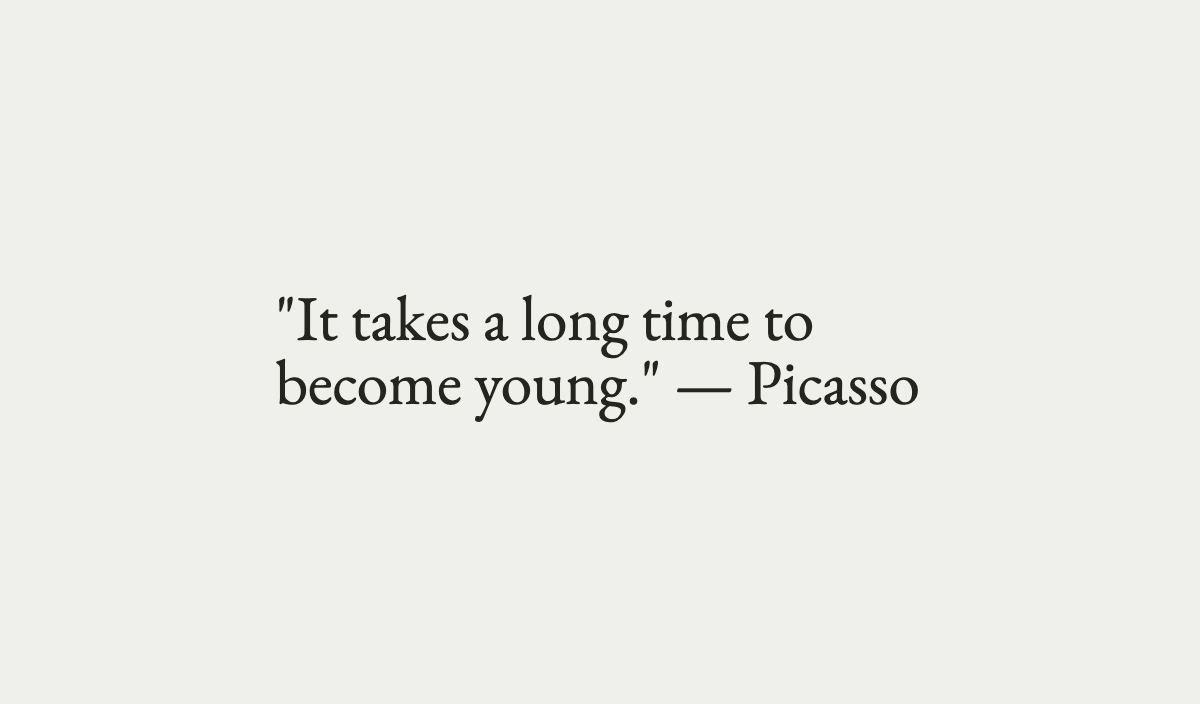
That child has not read the design blogs. It has not studied the mood boards or learned the vocabulary. It has no interest in whether something is considered good. It just knows. Quickly, quietly, without needing to explain itself. The child in you has an intuitive knowledge on what makes it lean forward and what makes it look away.
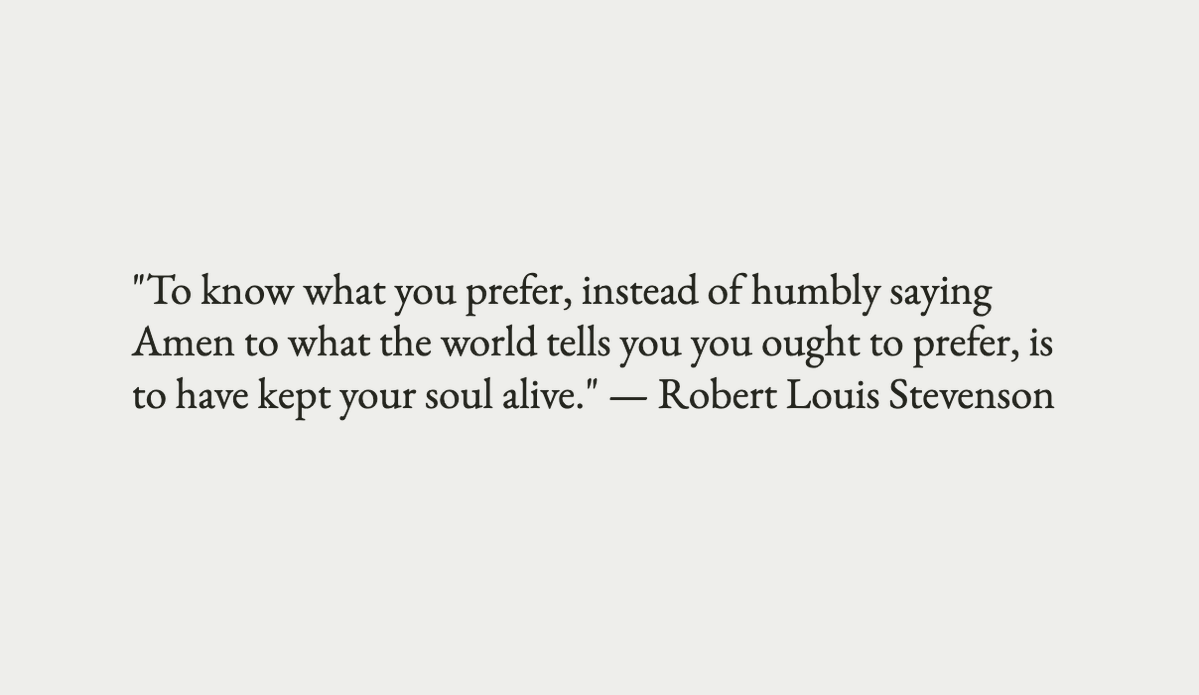
The problem is that you have spent years not letting it speak.
You walk into a shop and something strange catches your eye. Let’s say a color that is too intense, a shape that is a little off, something you cannot categorize and before you even reach for it, the embarrassment stops you even though your body was leaning towards it.
Your mind questions, What would this say about me? Does this fit? Is this the kind of thing a person like me should like? And so you put it down. You walk toward the safer thing. The child gets quiet again.
This happens so often and so fast that most people do not even notice it.
It is self-censorship.
Truth is that real taste is knowing yourself.
It is knowing—not thinking, knowing—what makes you feel more alive and what leaves you flat. It is the difference between a room that gives you energy and one that quietly drains it. Between a sentence that stops you and one you skim past. Between music that does something to your chest and music that is merely good.
Taste is felt before it is thought. If you have to convince yourself you like something, if you have to build a case for it, or wait for someone else to validate it, that is not your taste.
Liking something is not taste
This one will trip some of you.
You can find something beautiful without it being yours. There are interiors I admire, that I would not want to live in for a single afternoon. There are albums I think are great that do nothing to my mood. Admiration is appreciation of craft.
Taste is about harmony.
Following someone with good taste is also not taste.
This is where the X discourse goes most wrong. When someone says follow this person to develop your taste they are describing something closer to apprenticeship than self-discovery.
You might learn a great deal. You might expand your references. But you will be building fluency in someone else’s language.
Your taste lives in a different place.
I have this strange theory that when someone tells you that you have good taste, they are not really telling you about you. They are telling you that your preferences overlap with theirs. “Good taste” as a compliment always says more about the person giving it. It is, quietly, a mirror. Taste has become a commodity. And like most things that become commodities, it has been stripped of what made it valuable.
You can now buy a starter kit for taste. There are newsletters that tell you what to read, or how your desk setups should look like. Playlists curated by people whose whole identity is having good playlists. There are entire platforms built on the promise that if you consume the right references, you will develop the right eye. Taste has been productized.
The result is a strange kind of copying.
People who want to be seen as tasteful begin imitating the surface of taste. The particular fonts, the specific vintage, the exact shade of terracotta without ever doing the slower, quieter work of finding out what they actually love.
Taste has become a selfish act in the strangest way.
Meet Maya (imagine this is you)
Maya has been on Pinterest for six years. Her boards are beautiful. She has also, more recently, moved to Cosmos and
, because she read that serious people use those instead. Her references are impeccable.
But when Maya walks into a flea market her eye drifts toward something else entirely. A heavy burgundy velvet chair, slightly worn. A chipped ceramic bowl the color of sea glass. Things that have no place in her aesthetic. Things she would never save.
She keeps walking.
This is the cost of building taste from the outside. You end up very far from the things that actually call to you. You have a polished aesthetic entirely built by algorithms. You have nothing of what you can call your own.
The problem with Pinterest and Cosmos and every other platform built for visual collecting is the loop. You save what you already know you are supposed to like. The algorithm learns your pattern and shows you more of it.
Real taste cannot be curated into existence. It has to be discovered.
So how to build taste without algorithms?
The only method I know that finds your taste
Taste is built in the world, not on the internet. In the market, the library, the second-hand record shop where you flip through things nobody recommended. It accumulates through years of showing up to places without knowing what you are looking for and finding, occasionally, that something finds you instead.
You cannot shortcut this. You cannot build it from a feed, because a feed only shows you what you have already chosen to see, and taste requires the encounter with the thing you would never have thought to search for.
The more time you spend with yourself...genuinely with yourself, away from the scroll and the curation and the noise of other people’s preferences the more clearly you’ll start to hear what actually calls to you.
That is the whole practice. Know yourself well enough to notice the difference.
TL;DR
Everyone telling you how to build taste is, knowingly or not, just building more of their own. The curator sharing their library, the person recommending who to follow, the platform surfacing what’s trending—all of it moves you toward someone else’s center of gravity. Taste cannot be borrowed, installed, or reverse-engineered from the outside. It is not a category you graduate into or a collection you assemble correctly. It comes from somewhere much less convenient than that. It comes from knowing yourself, which is the one thing no library, no algorithm, and no well-meaning recommendation can do for you. The only way in is through. Spend more time with yourself than with your feed. Go to the market, the bookshop, the places where nothing is curated for you. And when something genuinely calls, follow it without asking anyone what it means.