In the 1450s, Gutenberg’s printing press put books into the hands of ordinary people for the first time.
The Church panicked because people were beginning to form opinions without an intermediary telling them what to think. The fear was people would start trusting themselves.
Three hundred years later, the industrial revolution took craftsmen who had spent years learning to feel the quality of a fabric, the grain of a wood, the balance of a tool in the hand and replaced that accumulated bodily knowledge with standardized production.
Was it efficient, yes. Umm was it scalable, yes.
But the worker who once knew through their hands what good meant now just ran the machine. The knowing moved out of the person and into the process.
Both times, the thing that got quietly removed was the same: the need to trust your own judgment. The press gave you someone else’s thinking preformed. The machine gave you someone else’s skill pre-executed.
You got the output without the development. And slowly, without anyone deciding it, the muscle weakened.
We are living through the third version of this.
Now
Here’s what I keep noticing, and I suspect you’ve noticed it too.
You sit down to write something. A newsletter, an email to a client, a job application or anything. You get two sentences in. The third one doesn’t come easily. And before you’ve given it ten seconds, you’ve opened a new tab. You’ve typed a prompt. You are reading Claude’s version of your third sentence, deciding whether it’s close enough.
The generation happened in four seconds. But you never had to struggle with the idea. You never had to find out what you actually think.
Or if you’re a developer the muscle memory of typing your code, the part where you make three small mistakes and learn from each one that’s gone.
I also noticed this in decision making as well. You’re considering a career move, a relationship decision, or you have an idea. And the thing you do without even noticing is describe the situation to an AI and ask what you “should” do. It gives you a thoughtful, balanced, well-structured response.
And you feel... settled. Like the thinking has been done.
Except the thinking wasn’t done. The thinking was outsourced. The model doesn’t know what you’re afraid of. It doesn’t know anything about you.
It gave you a good answer.
It didn’t give you your answer.
AI is training us
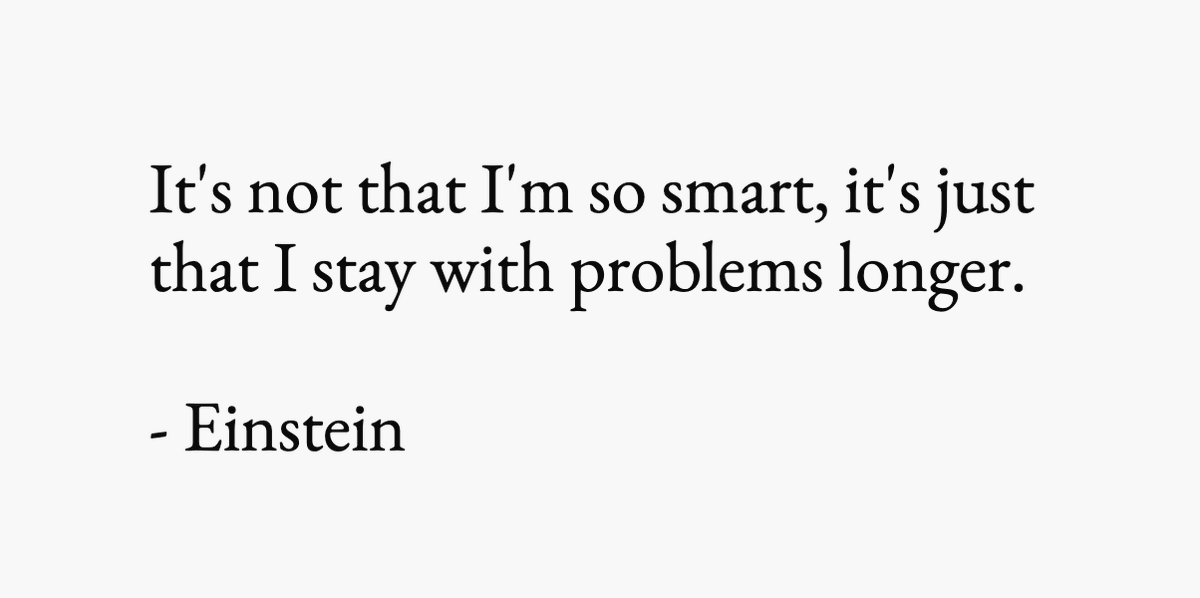
The story we tell about AI is that we are training it.
We feed it data, we correct its outputs, we shape its behavior. This is true.
But watch what’s actually happening at the population level, you’ll notice that AI is training us.
It is training us to begin with a prompt instead of a thought. To reach for the tool before we have sat with the problem long enough to feel what we actually think about it.
We’re slowly being wired to believe that our unassisted work is not quite good enough.
This is the shape of a new dependency, and it is building itself into us in ways we are not tracking because each individual moment of using AI feels like a reasonable choice.
Of course you use it to fix the email. Of course you use it to unblock the code. Of course you use it to improve the paragraph. Each of these is sensible. The accumulation is what we are not looking at.
And why are we trusting it so much? Because we think it’s perfect.
There is something telling about the specific kind of output AI produces. It is always coherent. Always complete. Structurally sound, tonally consistent, free of the rough edges that come from a real human being working at the edge of their ability.
We are writing perfect tweets, generating perfect Substacks, and creating perfect music with Suno.
There is no mess.
And the mess, which I want to argue here, was the point.
Beauty of human creation is that whatever we create always carry some trace of the us struggling with what we were trying to do. There is a quality in made things that comes directly from the resistance that we encountered, and it is not reproducible through any prompt.
We’re losing trust in ourselves
When you outsource thinking repeatedly over time you stop having a first instinct. Or more precisely you stop trusting that you have one. The internal voice that used to say, I think this is right gets quieter because you stopped trusting it.
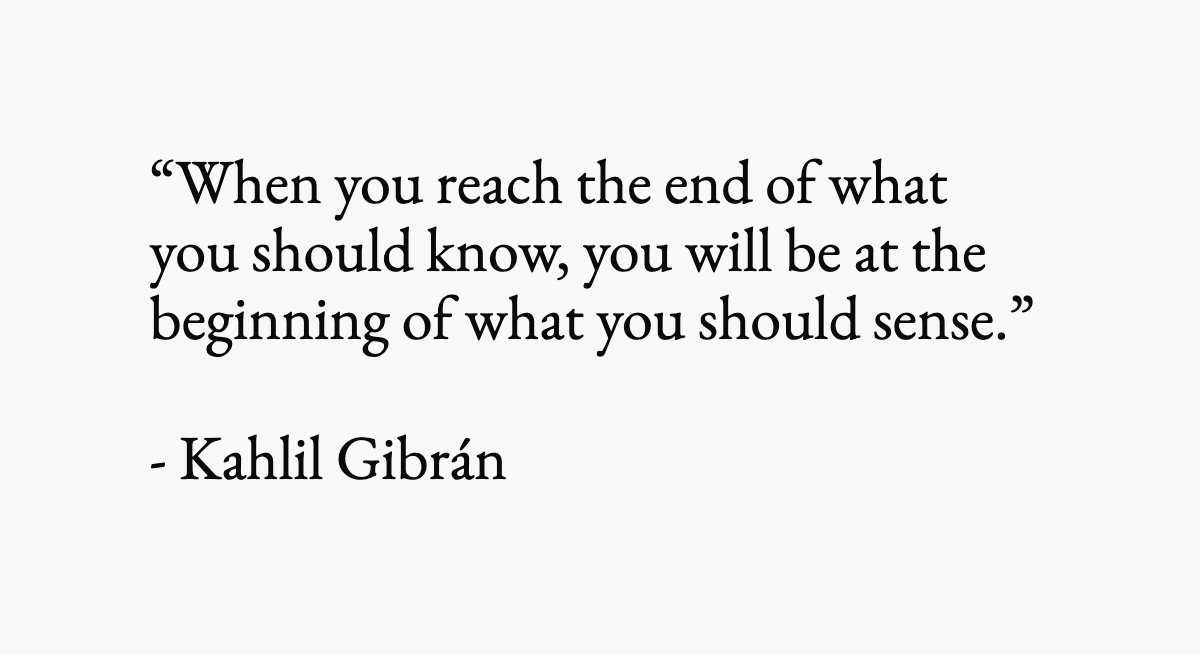
Gut feeling, intuition, judgment we talk about these like they’re either mystical or innate. Like you either have good instincts or you don’t. But that’s not what they are in my experience.
They are the residue of your experience, compressed into feeling.
When a senior designer looks at a layout and knows in three seconds that something’s off that’s experience. When an investor gets a bad feeling about a founder before they can articulate it that’s experience.
These things are built. They are built slowly. And they are built specifically through the act of trusting yourself enough to make a call, watching what happens, and updating.
But AI is breaking this “experience.”
Every time you reach for GPT before you’ve sat with the problem, you skip the attempt. You never find out if your instinct was right. Your gut never gets the feedback it needs to help you better in the future.
And so it doesn’t sharpen. It just... waits. And then it waits some more. And after a while it stops volunteering itself, because you’ve trained yourself to go elsewhere first.
This is how you lose trust in yourself.
The dangerous thing about AI is not that it gives you wrong answers. It’s that it gives you good enough answers at exactly the moment when struggling toward your answer would have built something in you.
This is something nobody is talking about.
Convenience is becoming the default and difficulty is becoming the exception.
What to actually do
1/ Take days where you don’t use it
Some days just write the email yourself. Write it badly if needed. Let the first draft be the first draft. Let the code be slower. Let the decision sit unprocessed for a while.
2/ Do things messily on purpose
Do something and break a few rules. Build something without a plan and see what it becomes.
3/ Notice when you’re about to reach for it out of discomfort rather than necessity
There’s a difference between using AI because you genuinely need the help and using it because you’re three seconds into a hard thing and you would rather not be uncomfortable.
We are not in danger of AI becoming too smart.
We are in danger of becoming too reliant and calling it smart.
The tool is extraordinary, use it, I use it too.
But some days, put it down and sit with not knowing for a little while.